
 Von Ryan M. Ebron, PFT, MM
Why Food Processing Matters
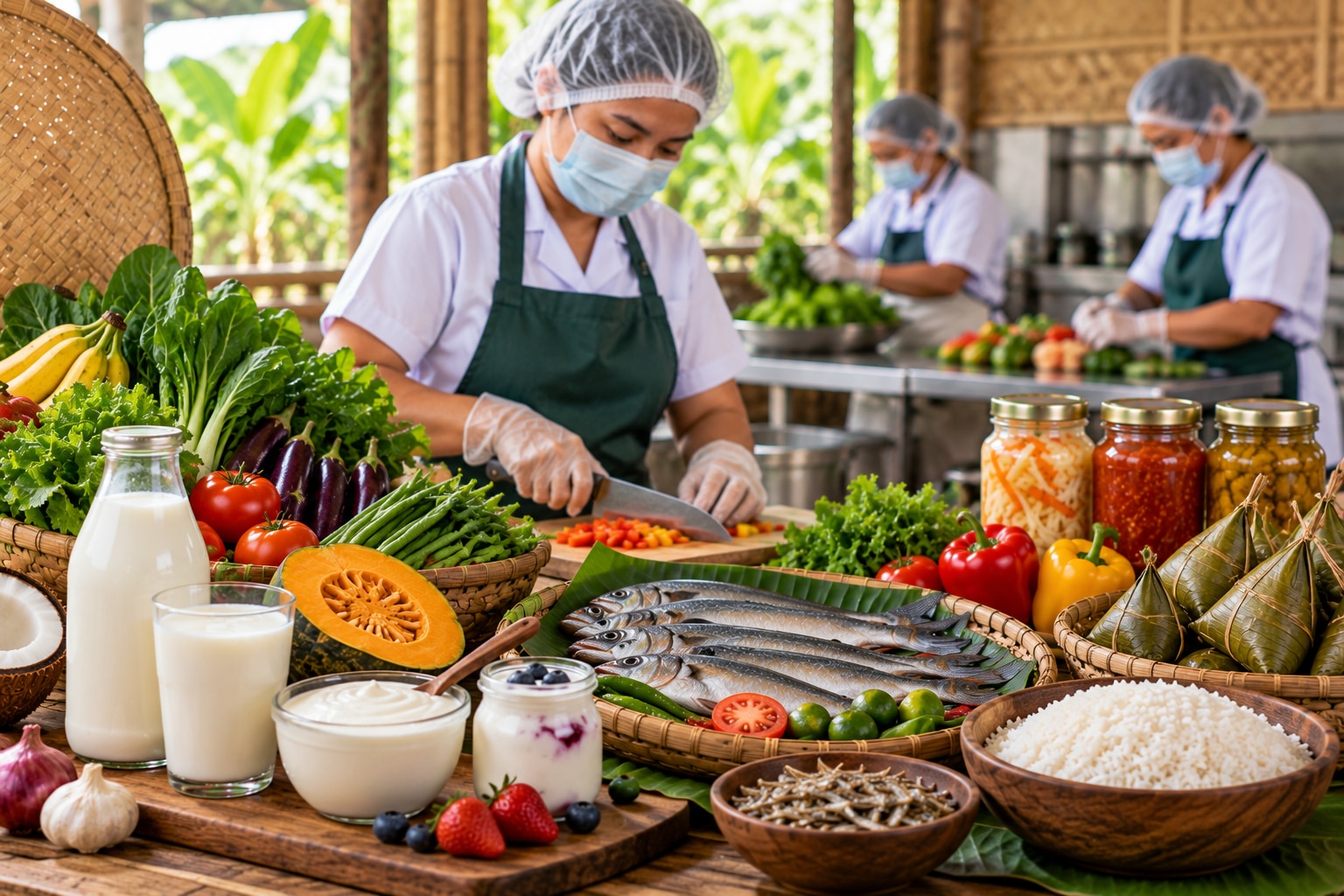
Food processing has long been part of the way Filipinos prepare and preserve food. Rice is milled, milk is pasteurized, fish is chilled, dried or canned, and products such as yogurt, bagoong and atchara undergo fermentation or pickling. Even washing, cutting, cooking and freezing are forms of processing because these change food from its original state. Thus, food processing is not a single practice that can simply be classified as good or bad. It includes different methods used to make food safe, extend its shelf life, improve its sensory quality, increase convenience or enhance its nutritional value.
This is particularly important in the Philippines, where seasonality, transportation, refrigeration, food prices and preparation time affect the food available to households. Processing may help move food from farms to markets and consumers, preserve surplus produce and make some nutrient-rich foods available beyond their harvest season. In evaluating a processed food, consideration should therefore be given to the method used, its purpose, the nutritional quality of the final product and how it is consumed as part of the diet (Augustin et al., 2016).
Understanding Processing: Purpose Matters
Food processing refers broadly to deliberate changes made to food before consumption. These may include milling, heating, pasteurization, chilling, freezing, drying, fermentation and canning (Augustin et al., 2016). Some methods are used mainly for food safety and preservation, while others improve texture, flavor or convenience. Processing also allows manufacturers to add nutrients through fortification.
The effect of a process is better understood by looking at its function. Freezing slows the deterioration of vegetables. Pasteurization reduces microbial hazards in milk and other beverages. Drying fish or fruits lowers water activity, while fermentation extends keeping quality and develops the characteristic flavors of many traditional foods. Fortification is another important application. The addition of nutrients to widely consumed staples and condiments may help address micronutrient deficiencies at the population level (World Health Organization [WHO], 2026b).
However, processing may also result in nutrient losses. Heat, oxygen, light, water and prolonged storage can reduce sensitive vitamins. Refining may remove fiber and micronutrient-rich portions of grains. Some formulated products may also increase sodium, free sugars or unhealthy fats. On the other hand, cooking and other processes can improve digestibility and the availability of certain nutrients. The nutritional outcome depends on the raw material, processing conditions and final formulation rather than on processing alone (Augustin et al., 2016).
Table 1. A practical processing spectrum
Purpose / level | Examples relevant to Filipino diets | Nutrition / food-system consideration |
| Minimal preparation or preservation | Washing, cutting, chilling, freezing | Can improve convenience and shelf life with |
| Safety and longer preservation | Pasteurization, fermentation, drying, | Can control hazards and extend availability; |
| Formulation or fortification | Fortified staples/condiments; foods | May improve nutrient delivery or convenience; |
Note.The categories in this table are practical descriptions based on the purpose and outcome of processing. They are not a formal classification system or a stand-alone measure of nutritional quality. Adapted conceptually from Augustin et al. (2016).
Safety, Shelf Life and Accessibility
Food processing is also an important food-safety control. Heating, pasteurization, refrigeration, freezing and drying can destroy or slow the growth of microorganisms when properly applied. WHO emphasizes that food-safety hazards must be managed throughout the food chain, including during processing, distribution and preparation (WHO, 2026a). Extending the safe storage life of food also reduces the likelihood that it will spoil before it is consumed.
Longer shelf life can improve food access, especially in areas where fresh products are not always available. Canned sardines, frozen vegetables, dried legumes and shelf-stable ingredients are generally easier to store and transport than highly perishable foods. Although they may not have the same characteristics as their fresh counterparts, freshness alone does not determine nutritional quality. A food should also be assessed based on the nutrients it provides, its safety, affordability and contribution to the whole meal.
Food Processing and Sustainable Food Systems
Food processing can contribute to a more sustainable food system by preventing losses of perishable or surplus foods. Freezing, drying, fermentation, canning and pasteurization extend shelf life and keep edible food in the supply chain (Augustin et al., 2016). The same principle applies in households and foodservice operations. Excess cooked food may be safely portioned and frozen, while ripe fruits and vegetables may be processed into products that can be stored and consumed later. These practices can reduce avoidable food waste.
However, longer shelf life does not automatically make processed food sustainable. Processing requires varying amounts of energy and water, while packaging may create additional environmental burdens. The growth of pre-packaged food production has also been associated with increased plastic use and waste (Ralston et al., 2026; Yates et al., 2024). In this regard, the benefits of preventing food loss should be considered together with resource use. Food manufacturers can improve sustainability by reducing energy and water consumption, utilizing edible by-products and minimizing or redesigning packaging. The appropriate method is one that provides food-safety and nutritional benefits without transferring the environmental burden to another part of the food system.
Making Informed Choices in the Filipino Setting
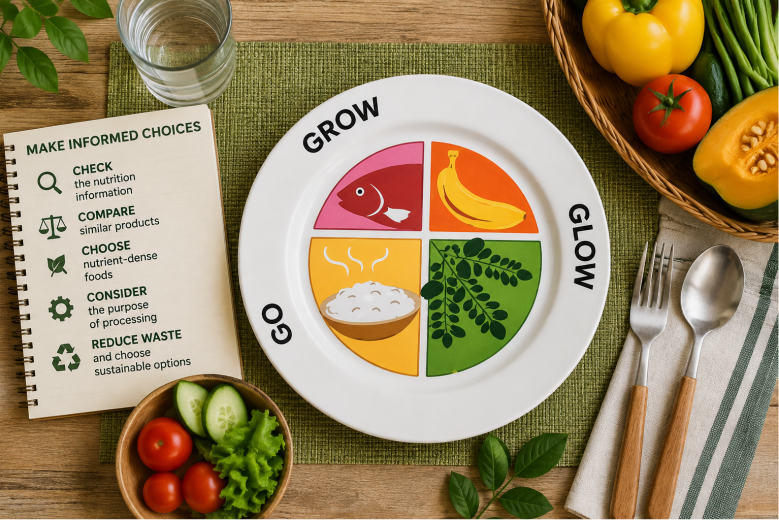
Consumers can use food-based dietary guidance and nutrition labels when selecting processed foods. PINGGANG PINOY(R) provides a practical framework for Filipino meals by recommending appropriate proportions of Go, Grow and Glow foods, with fruits and vegetables occupying half of the plate (Department of Science and Technology-Food and Nutrition Research Institute [DOST-FNRI], 2016). Processed foods may be included in this pattern, provided that they are selected and consumed appropriately.
Five Practical Filters
- Check the overall nutrient profile. Compare similar products based on sodium, free or added sugars, saturated fat, fiber and important micronutrients instead of relying only on claims found on the front of the package.
- Determine the purpose of processing. Preservation, food safety, fortification and reduction of food waste are useful benefits that may justify a particular process.
- Keep nutrient-dense foods as the foundation of the diet. Vegetables, fruits, legumes, whole grains and suitable protein sources should remain part of regular meals (WHO, 2026b).
- Consider portion size and frequency of intake. One food does not determine the quality of the diet, but the regular pattern of food choices does.
- Plan purchases and storage to minimize waste. Households should buy amounts they can use, follow storage instructions, rotate stocks, use leftovers safely and freeze suitable excess food before spoilage occurs.
Conclusion: A Tool, Not a Verdict
Food processing enables the food system to provide safe, nutritious and accessible food. It is beneficial when it controls hazards, preserves nutrients, extends shelf life, reduces food losses or makes food available to more consumers. However, these benefits may be reduced when the final product has poor nutritional quality, when the process consumes excessive resources, or when packaging creates
additional waste.
Food processing should therefore be evaluated based on its actual purpose and outcome. Nutrition professionals, food processors and consumers need to consider what the food provides, how it was produced, the amount and frequency of intake, and the food it may replace in the diet. When properly applied, food processing can support food safety, nutritional quality and resource efficiency. At the same time, the concerns associated with nutritionally poor processed foods should be addressed through better product formulation, responsible marketing, informed consumer choices and appropriate public-health policies.



No comments here yet.