
 Ms. MA Paz L. Sales
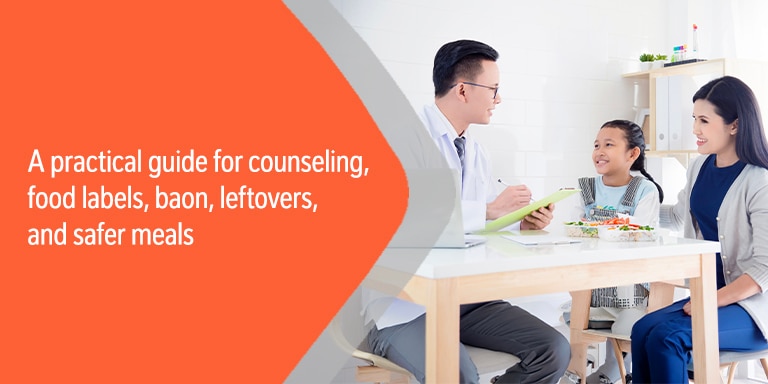
A practical guide for counseling, food labels, baon, leftovers, and safer meals
Nutrition advice becomes more useful when it helps people handle food safely in everyday situations. Practical guidance can support safer choices at home, in schools, workplaces, feeding programs, and communities. ³
Start with the Client’s Actual Food Environment
Consider access to potable water, refrigeration, insulated containers, clean preparation surfaces, and adequate cooking facilities. Advice should also reflect the foods commonly packed, purchased, shared, or reheated by the household. ³
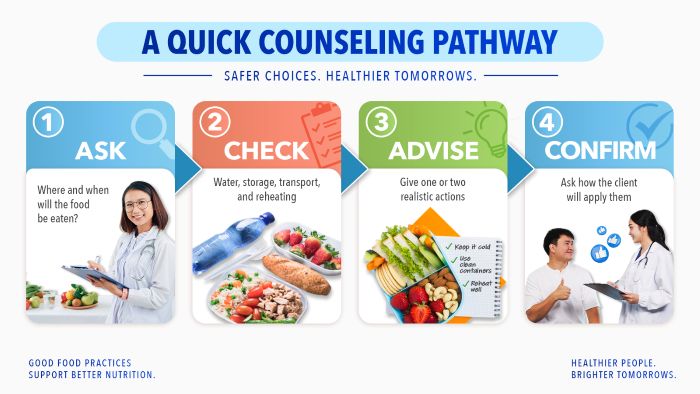
Nutrition counseling
- Discuss safe baon preparation, refrigeration and heating. ³
- Guide clients on handling takeout food and leftovers 4
- Include storage questions when discussing meal plans ³
Schools, workplaces, and feeding programs
- Reinforce proper handwashing and clean food-contact surfaces. ³
- Promote temperature control for foods requiring refrigeration or hot holding. ³
- Prevent cross-contamination between raw and ready-to-eat foods. ³
Community practice and health education
- Promote safe water and clean containers. ³
- Make advice realistic when facilities are limited. ³
- Use culturally familiar foods and situations. ³
Read Beyond the Nutrition Facts Panel
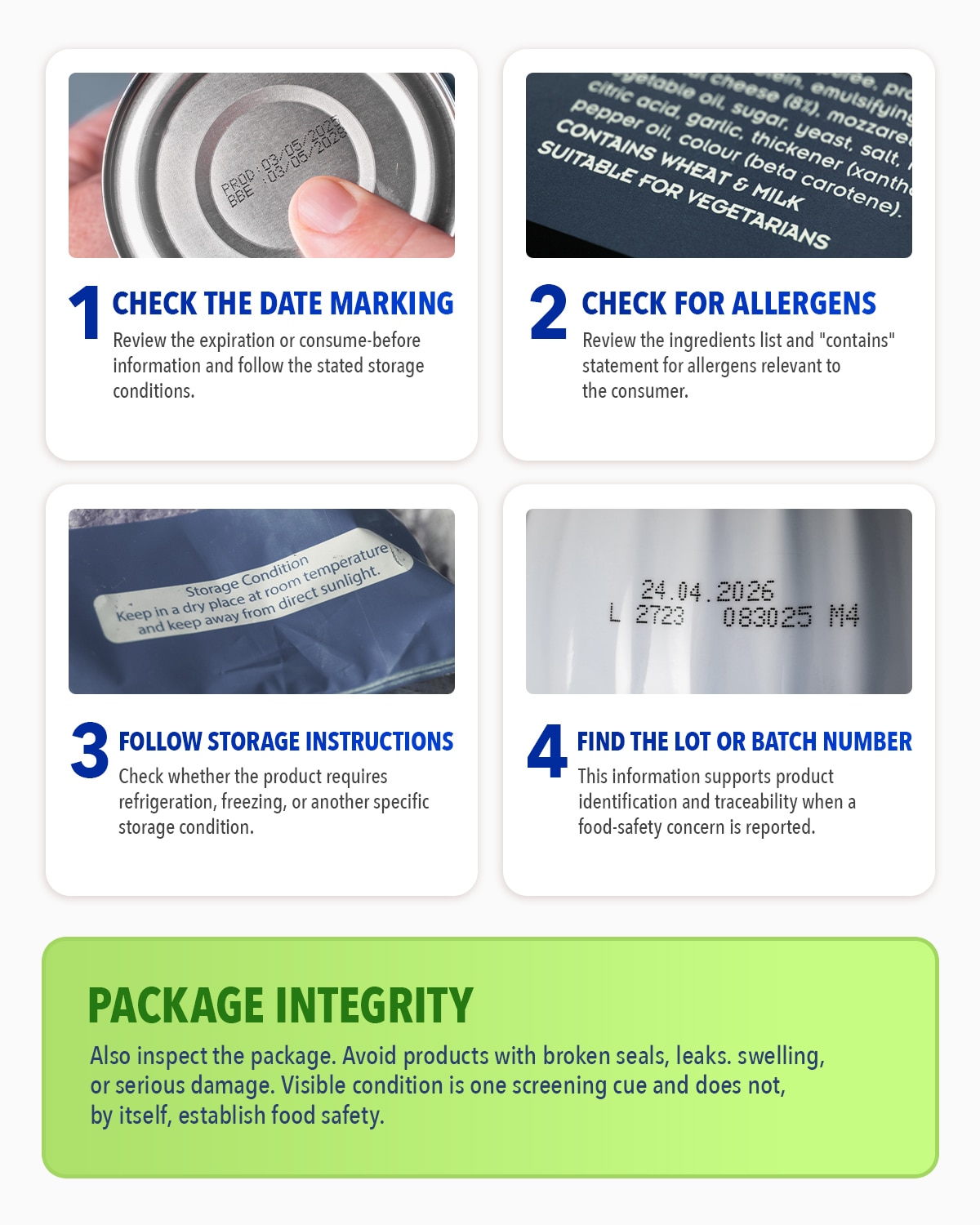
Food labels also contain information that supports safer purchasing, storage, preparation, and product identification. Date marking should be interpreted with the stated storage conditions and applicable Philippine regulations.¹,²
Everyday Filipino Food-Safety Decisions
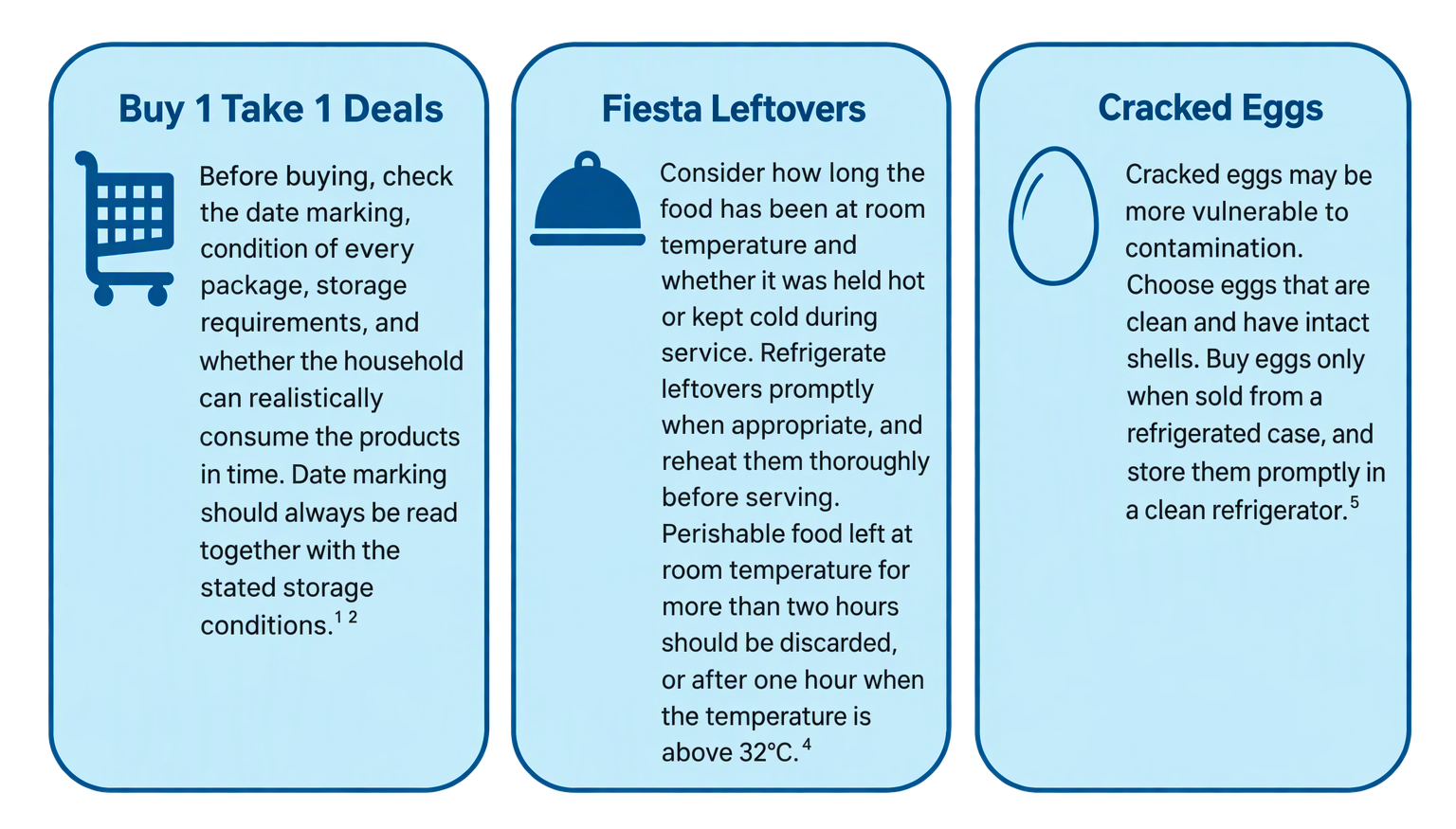
A PROMOTION IS NOT A SAVING IF FOOD IS WASTED
Before purchasing a multi-pack or Buy 1 Take 1 offer, check the date marking, package condition, storage space, and realistic use. ¹,²
Simple Food Safety Checklist
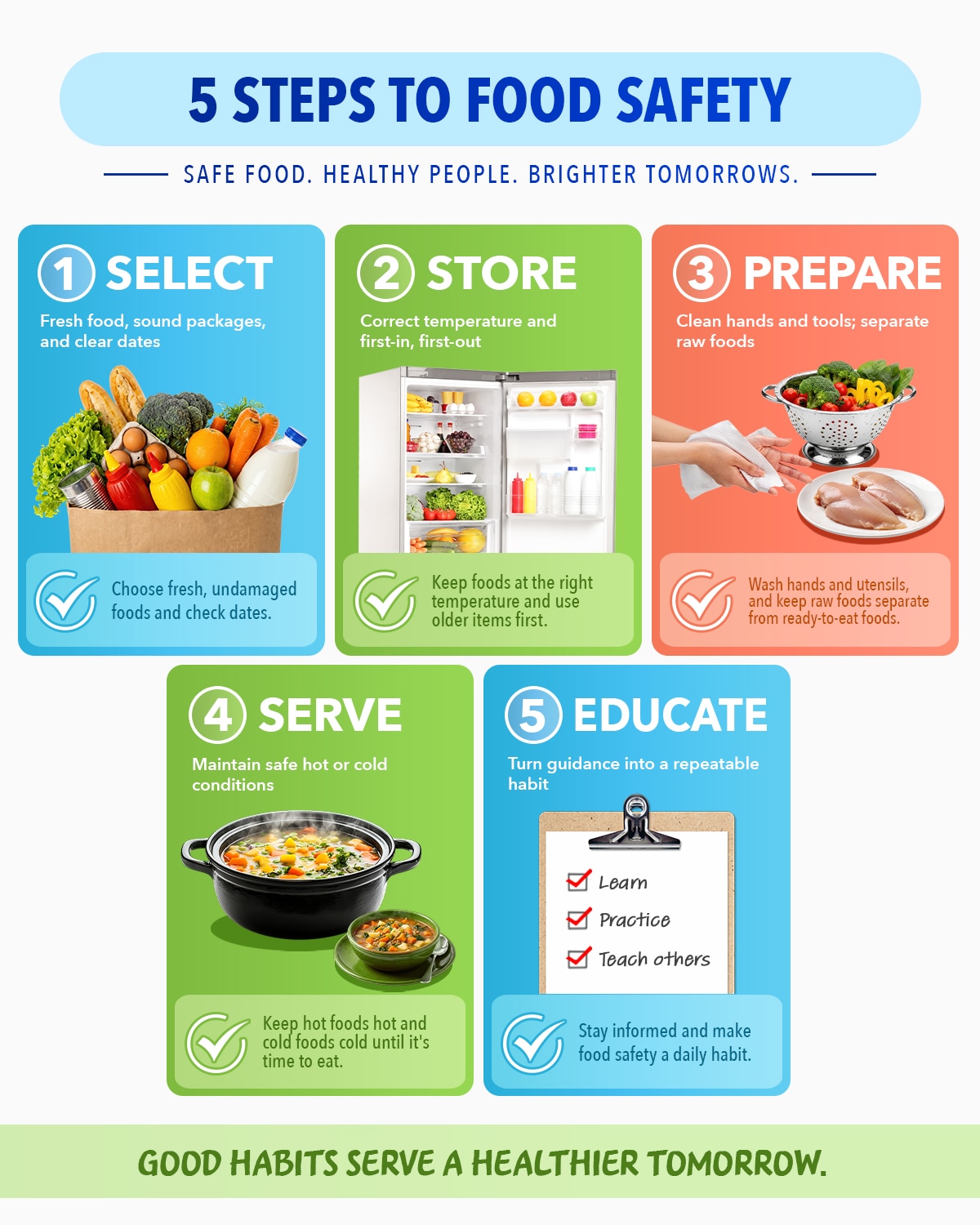
SELECT – Choose fresh foods, inspect packaging, and check date markings.¹,²,³
STORE – Keep perishable foods at safe temperatures and organize supplies so older items are used first.³
PREPARE – Wash hands, clean tools and surfaces, separate raw from cooked food, and cook food thoroughly.³
SERVE – Keep hot foods hot and cold foods cold, and limit the time perishable food stays at room temperature.³,⁴
EDUCATE – Share practical guidance with families, patients, students, food handlers, and communities.³
The RND’s Role: Make Safe Choices Practical
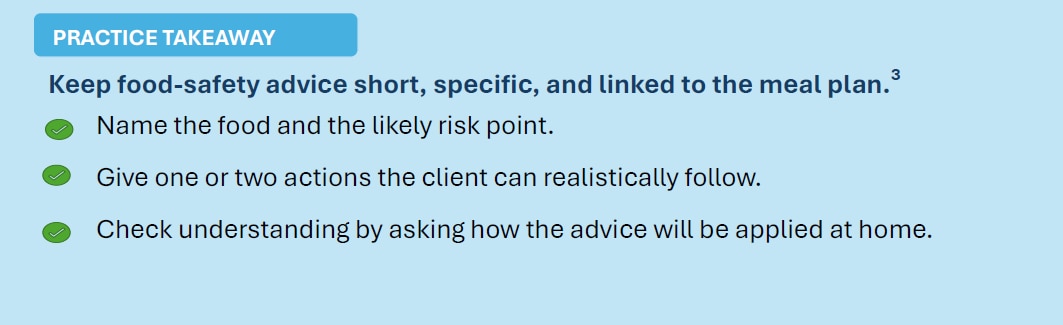
Food-safety education is most useful when it is specific, realistic, and connected to the client’s usual meals and resources. Rather than giving a long list of rules, focus on the decisions that matter for the food being discussed: selection, storage, preparation, service, and follow-through.³





No comments here yet.