
 Marc Dexter M. Macalintal , RND, MD, CPCFP, DipIBLM
Introduction
When we talk about behavioral change, food intake comes to mind at the forefront. People usually remove everything from their usual diet and go on to take only vegetables or totally discard a food group. This is usually the “all-or-nothing” mentality. Patients usually believe that in order to improve their metabolic markers, they must completely restrict themselves from eating the foods that they love, sometimes even socially isolating themselves from events. This approach could give some short-term results but fail in the long run.
In clinics, we can see that true dietary transformation does not stem from deprivation, but is a result of small, realistic, and sustainable dietary changes. If we can reframe the concept of eating “less” in that we shift the conversation from being deprived towards mindful reductions and strategic nutritional swaps, we can then empower patients to attain and maintain behaviorally sustainable strategies. This article explores how incremental shifts in our food choices accumulate into significant health benefits, emphasizing that being imperfect in terms of food intake is alright for long-term clinical success.
The Science Behind Small Dietary Improvements.
Extreme diets – those that remove specific food groups like the ketogenic diet– have been found to trigger metabolic adaptations, increase hunger hormones and cause psychological fatigue (Briggs et al., 2013; Sleboda et al., 2025). This creates a cycle of restrictions and rebound weight gain. In contrast, small dietary improvements are grounded in habit formation and sustainable metabolic adaptation.
Decreasing intake of added sugar, sodium, or taking smaller portions of energy dense foods are some strategies that can help the body and the mind to adapt without triggering a stress response. A lifestyle approach that incorporates these strategies improves insulin sensitivity, lowers lipid profiles, and gradually reduces systemic inflammation. These then translate to significant health benefits to include lowering of risk factors for non-communicable diseases such as hypertension and type 2 diabetes.
Having a sustainable change in nutrition is far more effective than drastic changes in the diet because the former preserves the patient’s relationship with food. It also shifts the focus to a lifelong, malleable approach to cater the nutritional needs of a patient, supporting their primary health goal without demanding absolute perfection.
Practical Approaches of “Less” in Filipino Food Culture.
An effective way to eat healthily is to remain realistic in terms of food planning. We choose foods that are within the bounds of Filipino eating patterns, while we promote flexibility and nutritional balance. Here are some tips on how to apply the principle of “less is more” to common local dietary habits.
- Less Refined, More Volume: Culturally, Filipinos live on a staple of white rice. Rather than gear people towards a “no rice” rule – which often alienates the patient – nutrition practitioners are encouraged to recommend a simple swap. We can advise patients to reduce their usual portion of white rice by a fraction and replace that volume with a more fiber rich type of rice like brown rice or red rice, and add more vegetables to the diet. Implementing a standard metric such as adding ½ cup cooked vegetables, such as saucy chopsuey, to the plate maintains the visual volume and satiety of the meal while significantly lowering the glycemic load and increasing micronutrient density.
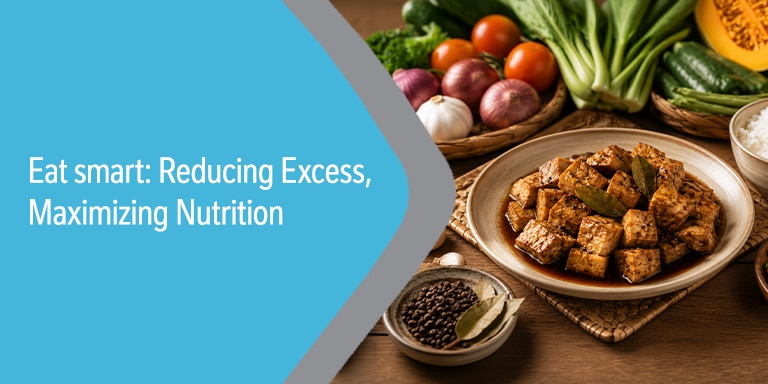
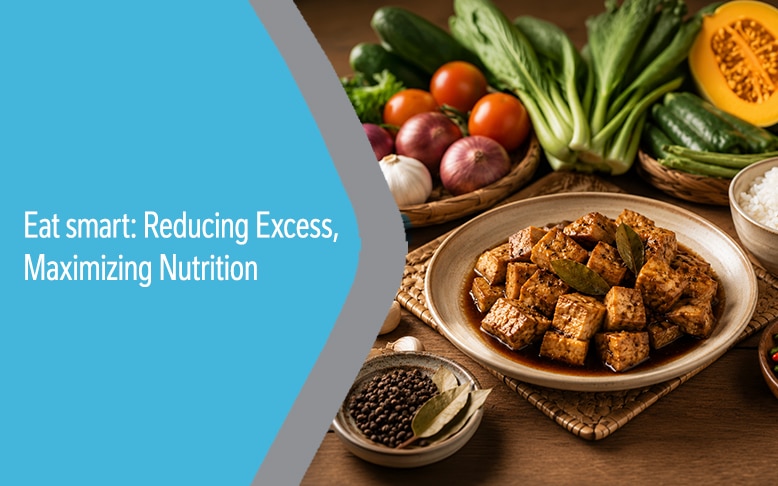
- Upgrading the Viand: Many Filipinos love dishes that rely on fatty meat cuts. The concept of “less” here applies to the saturated fat. Nutrition practitioners are encouraged to guide their patients to modify recipes like our famous sinigang and our world-renowned adobo by swapping the pork belly for mega 3 rich fish like bangus, or for chicken with the skin removed before cooking. They can also use plant-based proteins such as braised tofu or tokwa meatballs. This simple swap reduces inflammation by decreasing saturated fats while retaining the cultural essence and the flavor profile of the meal.
- Mindful Merienda: Filipinos love the afternoon merienda. However, the problem with the usual merienda is that it features sugary and fatty like pastries or sweetened beverages. One way to successfully bridge the cultural staple is to transition from calorie dense snacks to whole food alternatives. Nutrition practitioners are encouraged to counsel their patients to satisfy afternoon cravings with healthier alternatives such as a peach and mango smoothie paired with a handful of nuts to provide the desired sweetness while maintaining fiber, protein, and healthy fats. This effectively manages afternoon blood sugar spikes.
- Sodium Subtractions: Filipinos love their sawsawan, boullion cubes, and added salt to maximize the flavor profiles of dishes. An incremental change involves using less processed sodium, and maximize natural local aromatics. It is highly suggested to recommend using calamansi, ginger, garlic and lemon grass to achieve the desired flavor and acidity without the associated hypertensive risks of excessive sodium intake.
Behavioral Benefits: Adherence, Sustainability, and Mental Well-being.
As the Gen Z’s would say, “You do you”. Any diet we recommend goes to the wastebin and will be ineffective if the patient will not be able to adhere to it. This is where the behavioral benefits of small changes surpass very restrictive protocols.
It is also worth noting that we can remove the fear-based language around food. We can take away the labels on food as being “good” or “bad, or “clean” or “dirty” because when doing so, we can improve the patient’s mental well-being as we are also removing the burden of deciphering whether their food choice will be good or bad for them. It is a must to remember that in clinical nutrition, there is no good or bad food, only good and bad diets. If they can still enjoy family gatherings, fiestas, and their favorite cultural dishes by simply applying the principles of moderation, variety and balance, it drastically reduces diet-related anxiety. Being encouraging rather than prescriptive builds self-efficacy, and when patients realize that they can successfully navigate a small food swap, they build their confidence that is required to tackle more significant lifestyle modifications overtime. It will take time, but consistency matters significantly more than temporary perfection.
Practical Takeaways for Nutrition Practice and Daily Life.
For our Registered Nutritionist Dietitians and Health professionals, these concepts can be applied to our counseling strategies in our daily sessions.
- Assess and Modify, Don’t Erase. Continue doing dietary recall assessments by asking patients what they currently enjoy eating. We can also use recording applications to make our lives easier, to avoid under- or over- estimation of the food intake by the patient. We can then look for areas to make a 10 to 20% reduction in energy-dense items, replacing them with nutrient-dense alternatives rather than overhauling the entire dietary pattern.
- Use Concrete, Relatable Metrics: Avoid abstract advice like “eat more vegetables” or “exercise more”. We can do better by providing exact manageable targets tailored to their primary health goal, such as “add ½ cup of cooked leafy green vegetables 2x a day for the rest of the week”. Instructions like this add a measurable amount that we can check on their follow-up sessions.
- Celebrate Small Wins: We can shift our focus away from the weighing scale and toward behavioral consistency. Positive reinforcement works on patients starting their small changes. If a patient started to use half the usual amount of their dipping sauce, or opts for a plant-predominant protein source twice more than the usual, reinforce this patient so that they will not go on relapse.
Key Points:
- Less is Not Deprivation: small and incremental reductions in added sugar, sodium and processed foods can accumulate towards a significant measurable improvements in long-term health.
- Sustainability Over Speed: Habit-based changes are far more effective and sustainable than drastic dietary restrictions.
- Culturally Integrate the Changes: Employ realistic and adaptable changes within the bounds of everyday Filipino food culture. Individual preferences must be respected while still promoting nutritional balance overtime.
- Consistency Over Perfection: The goal of medical nutrition therapy is to create long term adherence and improve mental well-being by removing condescending language around food choices.



No comments here yet.