
 Ms. MA Paz L. Sales
Why Food Safety Matters Beyond Food Poisoning
Food Safety protects more than the meal itself. It supports nutritional well being, protects vulnerable groups, and strengthens the impact of nutrition advice and programs.
Healthy Eating Starts with Safe Food
In a community feeding program, two underweight children regularly received nutritious meals but later developed illness, missed sessions, and experienced poor appetite. Their situation reflected several connected concerns: hygiene, limited resources, preventive care, and access to adequate food.
Similar food-safety challenges occur in everyday Filipino settings. A school baon may be prepared early and eaten hours later. Food for a family outing or fiesta or handaan, may remain on the table for much of the day. Leftovers may then be kept for another meal. When food is handled or stored unsafely, harmful microorganisms can grow, illness may follow, and the nutritional value of the meal may no longer benefit the person who eats it.
KEY MESSAGE
Nutrition and Food Safety are inseparable.
A nutritious meal is only as beneficial as it is safe. Unsafe food can lead to illness that affects appetite, hydration, nutrient absorption and overall.
What this means for practice:
- Discuss safe food handling alongside healthy eating.
- Include food safety messages in nutrition counseling.
- Reinforce safe food practices in community and feeding programs.
Food Safety and Nutrition: Two Sides of the Same Plate
Food safety is the assurance that food will not cause harm when it is prepared and consumed according to its intended use. It includes the control of biological, chemical, physical, and allergen hazards throughout the food chain, from farm to table. Nutrition, meanwhile, encompasses the processes by which the body obtains and uses nutrients to provide energy, support growth and tissue maintenance, and regulate physiological functions. ¹
Food safety is the assurance that food will not cause harm when prepared and consumed according to its intended use. It includes controlling biological, chemical, physical, and allergen hazards from farm to table.
Nutrition encompasses the processes by which the body obtains and uses nutrients for energy, growth, tissue maintenance, and normal physiological functions.¹
Food-safety problems can undermine nutrition outcomes, while nutritional status may influence vulnerability to illness. The relationship operates through health and physiology, consumer behavior, supply chains, markets, policy, and regulation.²
How Unsafe Food Can Undermine Nutrition
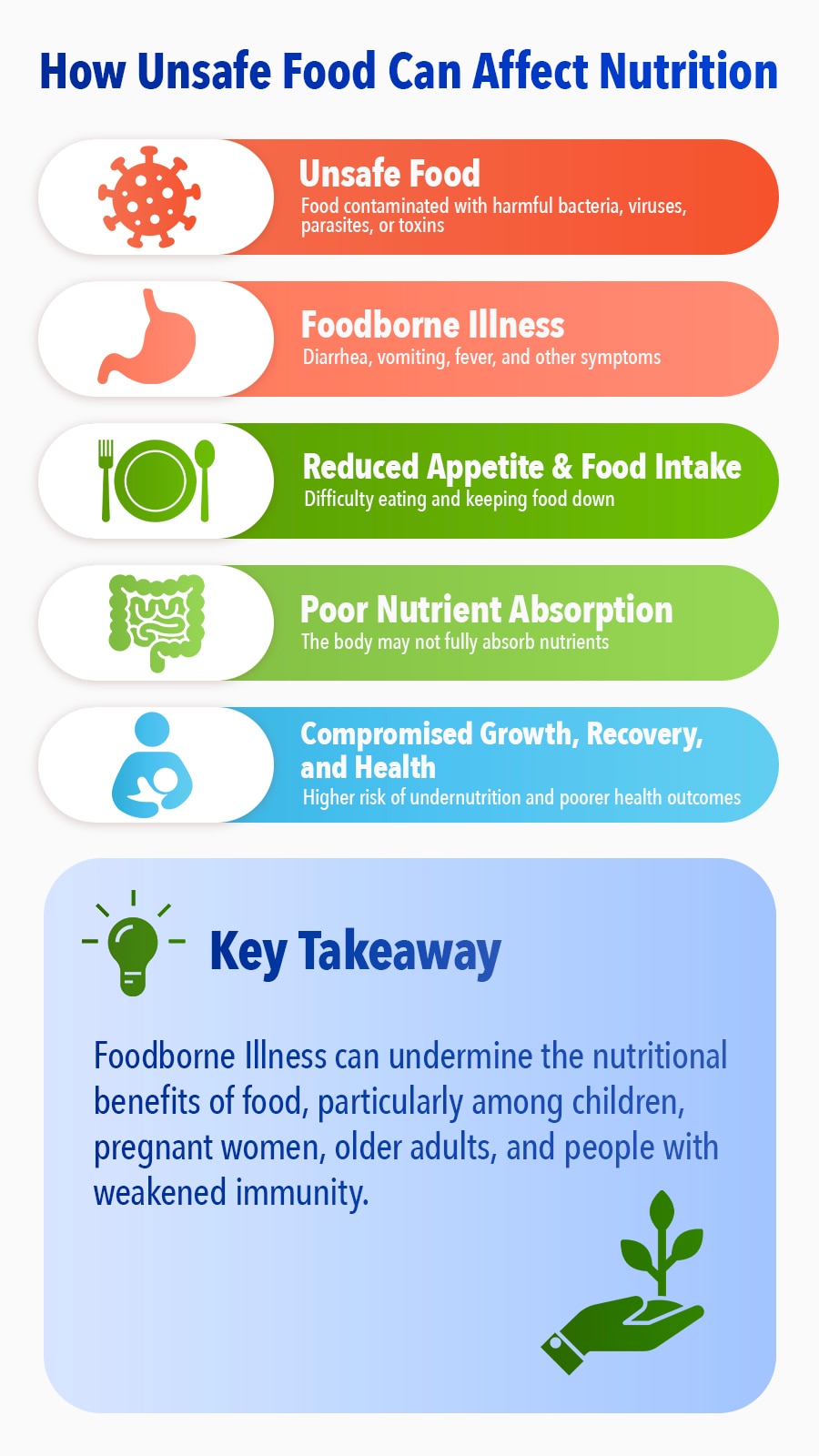
Illness can reduce intake and absorption
Foodborne illness may cause diarrhea, vomiting, fever, reduced appetite, and fluid loss. These effects can reduce food intake and interfere with nutrient absorption, with potentially greater consequences for people who are already nutritionally vulnerable.²,³
Some effects may continue after infection
Acute infectious gastroenteritis is a recognized risk factor for post-infection irritable bowel syndrome, which has been associated with changes in gut microbiota, mucosal barrier function, immune regulation, and gastrointestinal function.⁴
Unsafe environments may affect child growth
Repeated exposure to enteric pathogens where water, sanitation, and hygiene are inadequate may contribute to environmental enteric dysfunction. Evidence supports an association between intestinal inflammation and childhood stunting, although the pathways remain complex.⁵
Who Needs Extra Protection?
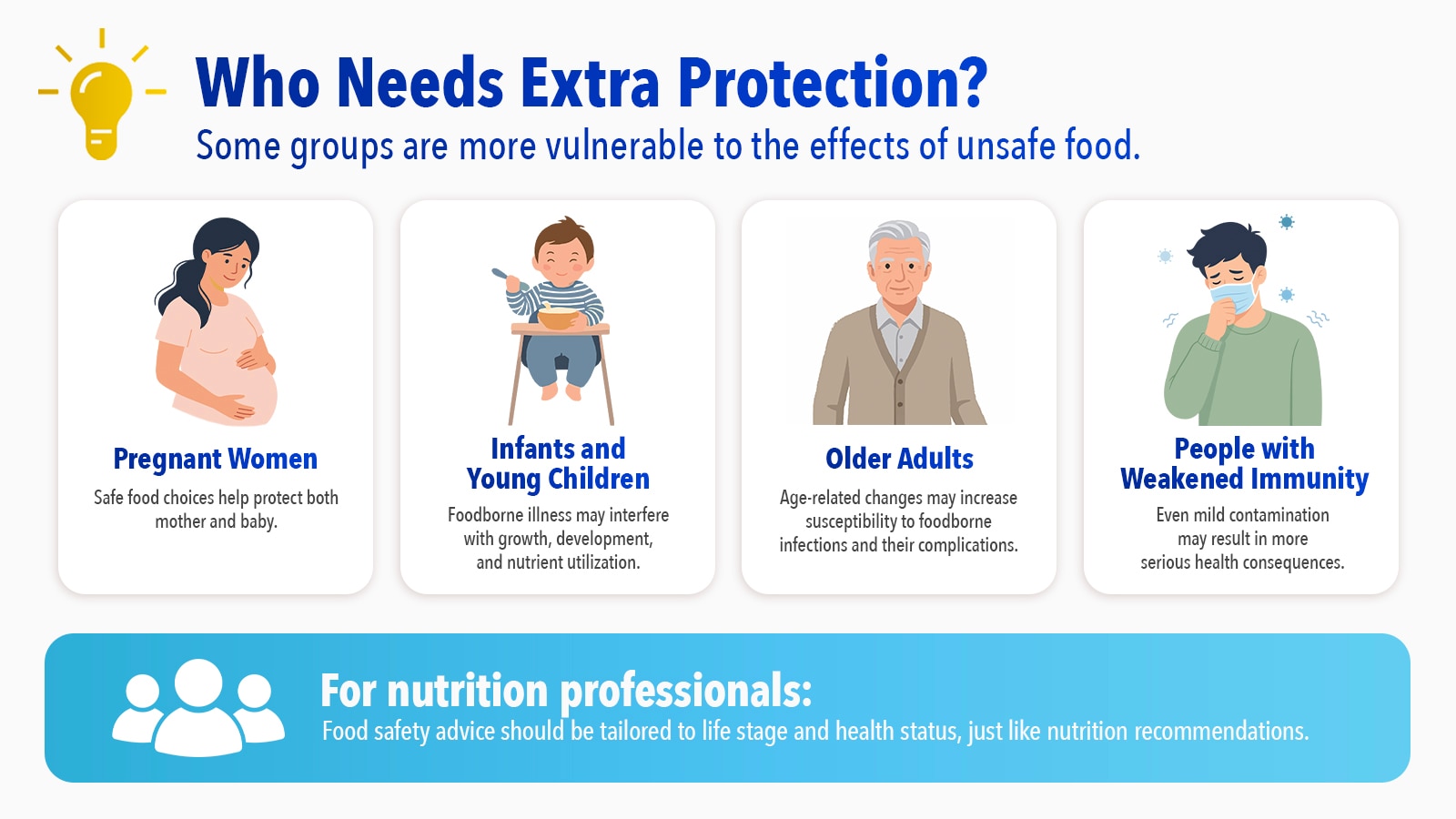
Food-safety guidance should be tailored to life stage and health status:
Pregnant women: Pregnancy-related physiological and immunological changes may increase susceptibility to certain infections.⁶
Infants and young children: The first 1,000 days, from conception to a child's second birthday, are a critical period for growth, immunity, brain development, and lifelong health. Illness that limits nutrient intake or absorption during this period may have lasting consequences.⁸
Older adults: Age-related health changes can increase susceptibility to infection and complications.³
People with weakened immunity or debilitating conditions: Extra care may be needed in food selection, preparation, storage, and service.³
What This Means for Nutrition Professionals
Registered Nutritionist-Dietitians can connect healthy eating with safe eating across counseling, schools, workplaces, feeding programs, foodservice, and community education.
PRACTICE TAKEAWAY
Pair every nutrition recommendation with the food-safety action needed to protect it.
- What could contaminate the food?
- How will it be stored after it is eaten?
- Does the client have safe water, refrigeration and reheating facilities?
Safe food supports better nutrition. Addressing both together helps protect health and strengthens the value of meals, nutrition programs, and dietary guidance.



No comments here yet.